About the Section
The Aquatic Animal Health and Disease Control Section is responsible for strengthening aquatic animal health management through disease surveillance and laboratory diagnosis. The Section supports sustainable aquaculture development by enhancing national capacity for aquatic animal disease detection, monitoring, and control in accordance with national regulations and internationally recognized standards.
Function
The Section carries out the following key functions:
- Investigate suspected disease outbreaks and provide technical support.
- Conduct aquatic animal disease surveillance and health monitoring programs.
- Perform laboratory diagnosis of infectious diseases using internationally recognized diagnostic methods.
- Conduct parasitological examinations for the detection and identification of aquatic animal parasites.
- Support disease prevention, biosecurity, and risk-based disease control measures.
- Provide technical guidance and diagnostic services to relevant stakeholders.
- Strengthen laboratory quality management and diagnostic capacity.
Laboratory Activities
The laboratory provides diagnostic services for aquatic animal diseases using molecular diagnostic techniques and parasitological examinations. Laboratory activities include sample receiving and processing, molecular testing for the detection of aquatic animal pathogens, parasitological examination using the pepsin digestion method, microscopic identification of parasites, result verification, proficiency testing, and continuous improvement to ensure accurate and reliable diagnostic services.
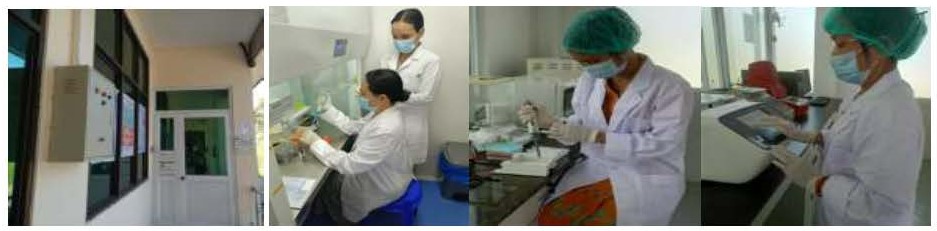
Fig1: Virus detection in PCR Lab
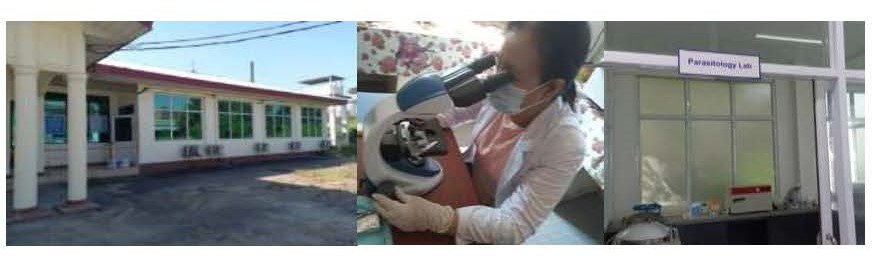
Fig 2: Parasitic examination in Parasitology Lab
International Collaboration
The Section actively collaborates with the World Organisation for Animal Health (WOAH) and other regional and international organizations to strengthen aquatic animal disease surveillance, laboratory diagnostic capacity, and disease prevention programmes. It supports transparent and timely aquatic animal disease reporting through the World Animal Health Information System (WAHIS) in accordance with WOAH international standards and participates in regional cooperation, technical meetings, training programmes, and capacity-building activities related to aquatic animal health.
The Section also participates in regional cooperation under the Bay of Bengal Initiative for Multi-Sectoral Technical and Economic Cooperation (BIMSTEC), promoting knowledge sharing, technical exchange, and capacity-building activities on aquatic animal health and disease management. In addition, the Section engages with relevant regional and international partners especially for South East Asia Fisheries Development and Education Center (SEAFDEC), Network of Aquaculture Center in Asia-Pacific(NACA) & Freshwater Fisheries Research Center(FFRC-China) to enhance diagnostic capability, biosecurity, and disease control in support of sustainable aquaculture.
News and Activities
The Section regularly conducts disease surveillance, laboratory diagnostic activities, sample collection, field investigations, technical meetings, workshops, and training programmes. Updates on these activities, together with information on international cooperation and laboratory achievements, are shared through the Department’s official communication channels.
Aquatic Animal Disease Surveillance Programme
The Department of Fisheries, Myanmar, is implementing an Aquatic Animal Disease Surveillance Programme in accordance with the World Organisation for Animal Health (WOAH) Aquatic Animal Health Code, and relevant international standards for aquatic animal health management.
The programme aims to strengthen aquatic animal health management, support the safe international trade of aquaculture products, and enhance confidence in Myanmar’s aquatic animal health control and surveillance system.
Surveillance Approach
At present, the surveillance programme is primarily implemented through passive surveillance, including disease notifications, farmer reporting, clinical observations, and field investigations. Suspected disease cases and relevant samples are collected and submitted to designated laboratories for diagnostic investigation.
The Department of Fisheries coordinates surveillance activities through the Competent Authority, regional officers, field personnel, and diagnostic laboratories. Surveillance information and relevant disease notifications are maintained and communicated through appropriate national and international channels, including the World Organisation for Animal Health (WOAH) and the Network of Aquaculture Centres in Asia-Pacific (NACA), as applicable.
Current Surveillance Activities
Since its initiation in January 2026, aquatic animal disease surveillance activities have been implemented in more than 20 commercial aquaculture farms located across five aquaculture zones in Ayeyarwady Region and Yangon Region.The programme currently focuses on freshwater aquaculture species.
Surveillance and diagnostic activities include:
• Farm-level disease monitoring and clinical observation
• Disease reporting and notification
• Sample collection and submission
• Microscopic examination
• Polymerase Chain Reaction (PCR)-based diagnostic testing
• Documentation and monitoring of laboratory results
Target Diseases
The surveillance and diagnostic activities focus on important aquatic animal diseases, including WOAH-listed diseases and other economically significant diseases relevant to cultured species and export requirements.
Key diseases currently included in the surveillance and diagnostic activities are:
• Spring Viremia of Carp Virus (SVCV)
• Koi Herpesvirus (KHV)
• Epizootic Ulcerative Syndrome (EUS)
• Gyrodactylus spp.
• Other relevant parasitic infections and diseases identified through field investigations and laboratory surveillance
Export-Oriented Disease Testing
As part of its export-related activities, the Department of Fisheries also conducts disease testing programmes for aquaculture farms supplying fish for international markets, including farms operating under Good Aquaculture Practices (GAqP) and Best Aquaculture Practices (BAP)-related requirements.
Samples collected from aquaculture farms in Ayeyarwady Region and Yangon Region have been tested for diseases including SVCV, KHV, EUS, and parasitic infections.
Conclusion
Through these ongoing activities, the Department of Fisheries continues to strengthen Myanmar’s aquatic animal health surveillance system, support safe and sustainable aquaculture production, facilitate international trade, and maintain transparency in disease monitoring and reporting.